
You’ve probably heard the same advice since childhood: get your teeth cleaned regularly.
But is that rule actually right for everyone?
For some people, twice-yearly cleanings are a practical way to stay ahead of plaque, tartar, cavities, and gum problems. For others, a dentist may recommend a different schedule based on their oral health, history, and risk factors.
So, do you really need a dental cleaning every six months? The honest answer is: it depends.
Why Are Regular Dental Cleanings Important?
Brushing and flossing at home do a lot of the heavy lifting, but they can’t remove everything.
Plaque is a sticky film of bacteria that forms on your teeth. When plaque isn’t adequately removed, it can harden into calculus, also called tartar. Once tartar forms, it can’t simply be brushed away at home; professional dental instruments are needed to remove it. The National Institute of Dental and Craniofacial Research (NIDCR) notes that untreated plaque and tartar can contribute to gum disease.
That is one reason regular dental cleaning remains an important part of preventive care.
Is Every Six Months a Strict Rule?
Not necessarily.
There’s no universal schedule that works perfectly for every patient. Someone with healthy gums, excellent home care, and a low risk of cavities may have different needs from someone with a history of gum disease or frequent cavities.
The NIDCR recommends routine dental checkups and professional cleanings while noting that some people may need to be seen more frequently, particularly those at higher risk for certain oral health problems.
Your dentist may consider factors such as:
- Your history of cavities
- Gum health
- Plaque and tartar buildup
- Previous periodontal disease
- Oral hygiene habits
- Smoking or tobacco use
- Dry mouth
- Certain medications or health conditions
- Existing dental restorations
So, if you’ve always wondered whether regular dental cleaning every six months is mandatory, think of six months as a common benchmark—not a rule carved in stone.
What Happens During a Professional Cleaning?
A cleaning isn’t simply about making your teeth feel smooth afterward.
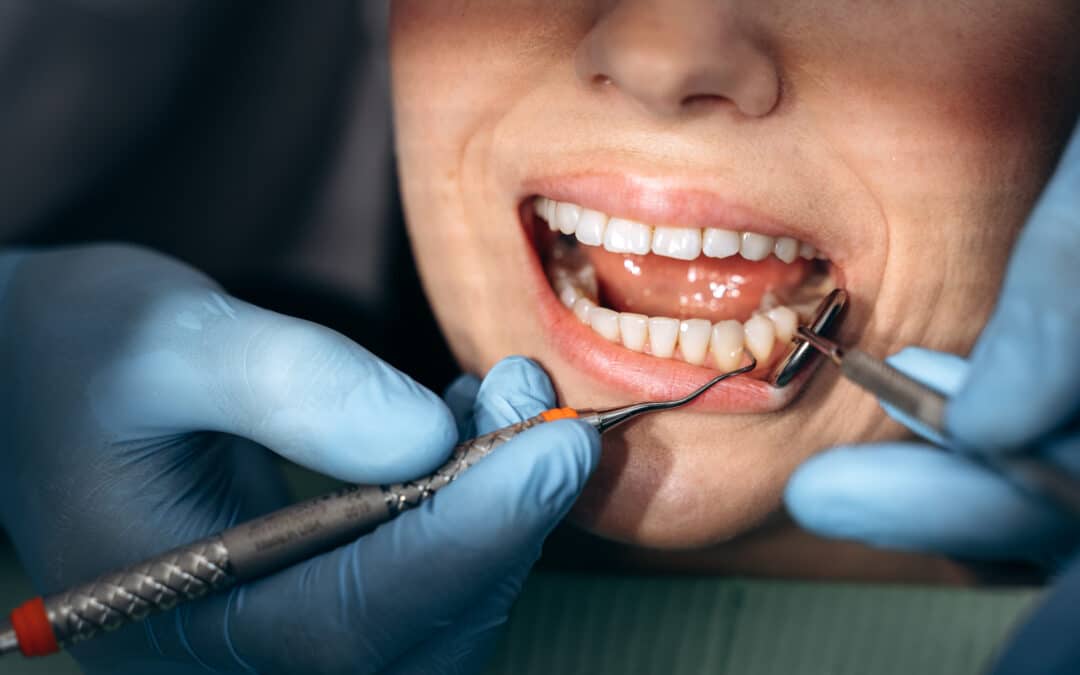
During a routine visit, your dental team can remove accumulated plaque and tartar and assess your gums and teeth for signs of potential problems.
Depending on your appointment, your dental team may:
- Examine your teeth and gums.
- Check for plaque and tartar.
- Professionally clean the teeth.
- Polish the teeth.
- Assess areas that may need additional attention.
- Discuss your home-care routine.
This combination of prevention and early detection is one reason regular dental cleaning can be valuable even when nothing hurts.
What Can Happen If You Skip Cleanings?
The tricky thing about many dental problems is that they don’t always announce themselves.
You might have early gum inflammation without significant pain. A small cavity may not bother you at first. Tartar can quietly accumulate around the gumline.
NIDCR explains that gum disease can begin with red, swollen, or bleeding gums and may progress to damage involving the tissues and bone supporting the teeth if left untreated.
That’s why waiting until something hurts isn’t always the best strategy.
Regular dental cleaning can be one part of a larger preventive approach designed to identify potential concerns before they become more complicated.
Who May Need More Frequent Cleanings?
Some patients benefit from a schedule more frequent than twice a year.
For example, your dentist may recommend more frequent visits if you have:
| Risk Factor | Why Your Schedule May Differ |
|---|---|
| History of gum disease | Gum health may require closer monitoring |
| Frequent cavities | Additional preventive care may be beneficial |
| Heavy tartar buildup | Tartar cannot be removed effectively at home |
| Dry mouth | Reduced saliva can increase cavity risk |
| Diabetes or certain health conditions | Some conditions can increase oral-health risks |
| Smoking or tobacco use | Tobacco is a significant risk factor for gum disease |
| Difficulty maintaining home care | More professional support may be helpful |
NIDCR specifically notes that people at higher risk for gum disease or tooth decay may need more frequent dental visits.
What About People With Very Healthy Teeth?
If you’ve never had a cavity, your gums don’t bleed, and you maintain excellent oral hygiene, you might wonder whether you can stretch your appointments further apart.
That’s a conversation to have with your dentist rather than deciding on your own.
Your dental team can look at your individual risk factors and determine an appropriate preventive schedule. Even people with healthy smiles can develop changes over time.
In other words, regular dental cleaning isn’t just about fixing problems—it’s also about keeping track of what’s happening in your mouth.
Your Home Routine Still Matters
A professional cleaning can’t replace daily oral hygiene.
Think of your routine as a team effort:
At home: brush twice daily with fluoride toothpaste and clean between your teeth regularly.
At the dental office: receive professional cleaning, examinations, and personalized guidance.
NIDCR recommends brushing twice a day with fluoride toothpaste and cleaning between teeth regularly.
If traditional floss isn’t your favorite, don’t give up. Interdental brushes, floss holders, and water flossers may be useful alternatives depending on your needs.
What If You’re Overdue for a Cleaning?
Don’t feel embarrassed.
Life gets busy. Work, school, family schedules, travel, and everything else can make dental appointments easy to postpone.
If it’s been a year—or several years—since your last visit, there’s no benefit in feeling guilty about it. The important thing is to get back on track.
If you’re searching for a dentist in Tulsa, Utica Dental of Tulsa provides general and preventive dental care at 1720 S Utica Ave, Tulsa, OK 74104, United States. You can call +1 918-673-2601 to schedule an appointment.
Meet Dr. Matthew E. Walker
At Utica Dental of Tulsa, preventive care is part of a broader approach to maintaining long-term oral health.
Dr. Matthew E. Walker earned his Doctor of Dental Surgery degree from the University of Oklahoma, graduating with Honors in 2001. He has continued his dental education extensively, including advanced training in cosmetic dentistry, laser gum surgery, dental implant dentistry, and Invisalign®. He was born and raised in Tahlequah and now lives in Tulsa with his family.
That commitment to continuing education is important because modern dentistry isn’t just about treating a tooth when it hurts. It’s about understanding the patient’s overall dental needs and creating an appropriate long-term plan.
U.S. Organizations You Can Trust for Dental Health Information
When researching oral health online, it’s smart to rely on credible sources rather than social media posts or viral dental hacks.
Useful U.S. organizations include:
- National Institute of Dental and Craniofacial Research (NIDCR) — part of the National Institutes of Health and a major source of evidence-based oral health information.
- Centers for Disease Control and Prevention (CDC) — provides public-health information and resources related to oral health.
- American Dental Association (ADA) — the nation’s major professional organization representing dentists and providing patient education resources.
For example, NIDCR recommends routine dental visits and professional cleanings as part of maintaining oral health.
Frequently Asked Questions
1. Is a dental cleaning every six months necessary?
Not for everyone. Six months is a common interval, but your ideal schedule depends on your oral health, risk factors, and dental history. Some people need more frequent visits, while others may have a different schedule recommended by their dentist.
2. What happens if I skip a dental cleaning?
Plaque and tartar can accumulate, potentially contributing to cavities and gum disease. You may also miss an opportunity to identify developing dental problems early.
3. Can I remove tartar at home?
No. Brushing and flossing help remove plaque, but hardened tartar requires professional removal by a dentist or dental hygienist.
4. Do people with healthy teeth still need professional cleanings?
Yes, routine dental visits can help maintain oral health and identify changes that aren’t always noticeable at home. Your dentist can recommend a schedule based on your individual risk.
5. What if I haven’t had a cleaning in years?
Don’t panic or feel embarrassed. Schedule an examination and cleaning. Your dental team can evaluate your current oral health and recommend the appropriate next steps.
The Bottom Line
So, do you really need a dental cleaning every six months?
For many people, twice-yearly visits are a useful preventive routine. But your ideal schedule should be based on your mouth—not an arbitrary calendar date.
The most important thing is to maintain good daily oral hygiene and keep up with professional dental care at an interval recommended for your needs.
For patients looking for regular dental cleaning and comprehensive preventive care, Utica Dental of Tulsa can help you build a dental-care schedule that fits your smile and your long-term goals.
Call Utica Dental of Tulsa at +1 918-673-2601 to schedule your appointment.