Are you afraid of going to the dentist? Do you cringe at the thought of drills and needles? If so, then laser dentistry may be just what you need to ease your anxiety. Laser technology has revolutionized the field of dentistry, providing patients with less invasive procedures and faster recovery times. In this blog post, we will explore how dental procedures have been enhanced by laser technology and what you can expect from these innovative treatments. Get ready to say goodbye to traditional dental methods and hello to a more comfortable experience!
What is Laser Dentistry
Laser dentistry is a modern approach to dental treatment that uses specialized lasers to perform various procedures. These lasers emit concentrated light energy, which can be used for cutting, shaping, and removing soft or hard tissues in the mouth.
One of the main benefits of laser dentistry is its precision. The laser can target specific areas with accuracy and without damaging surrounding tissue. This results in less pain, swelling, and bleeding during and after the procedure.
Another advantage of laser technology in dentistry is that it reduces the need for anesthesia. Because it causes less discomfort than traditional methods, patients may not require local anesthetic injections or general sedation.
Laser dentistry has also been found to reduce healing time by promoting faster tissue regeneration and reducing inflammation around treated areas. It’s also helpful for patients who have anxiety about dental treatments since it’s quieter than drilling sounds from conventional methods.
Laser technology has transformed modern-day dental care by providing more comfort for those undergoing treatment while achieving superior clinical results compared to traditional approaches.
What dental procedures can be performed with lasers?
Laser dentistry has revolutionized the way dental procedures are performed, offering patients a more comfortable and efficient experience than ever before. With advanced laser technology, dentists can now perform a wide range of treatments with increased precision and reduced recovery time.
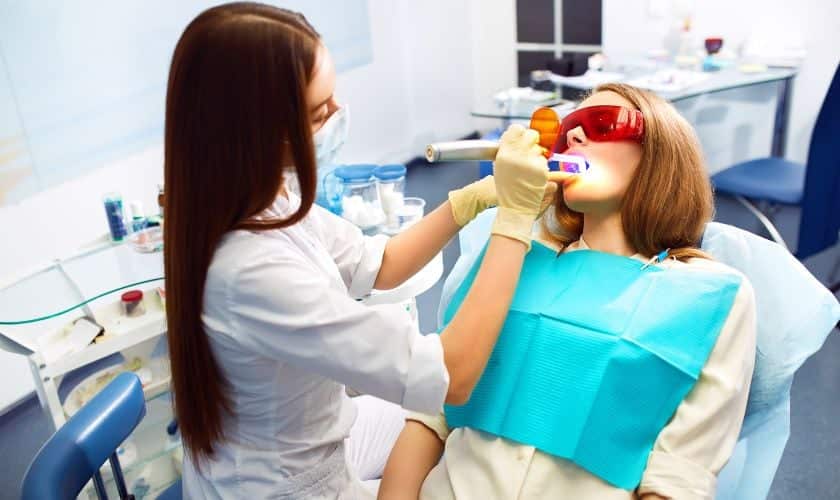
One of the most common treatments that can be done using lasers is teeth whitening. The procedure involves applying a special solution to the teeth before directing the laser beam onto them. This helps activate the solution and speeds up its effects, resulting in whiter, brighter teeth in just one sitting!
Another popular treatment that utilizes dental lasers is gum reshaping or contouring. This procedure is ideal for patients who have an uneven gum line or gums that cover too much of their teeth. By carefully removing excess tissue with a laser beam, we can create a more symmetrical smile.
In addition to cosmetic treatments, lasers can also be used to treat various oral health issues such as cavities and gum disease. Laser-assisted cavity removal allows us to remove decayed areas while preserving as much healthy tooth structure as possible.
For those suffering from periodontal disease (gum disease), lasers offer an effective alternative to traditional scaling and root planing methods. Dental lasers target bacteria beneath the gums without damaging surrounding tissues resulting in faster healing times for patients.
There are many procedures available with laser technology that provides better results while reducing discomforts associated with some conventional techniques.
What should you expect after undergoing a dental laser procedure?
After undergoing a dental laser procedure, it is normal to experience some sensitivity and discomfort in the treated area. This can be managed with over-the-counter pain relievers or prescribed medication from your dentist.
You may also notice some swelling and redness around the treated teeth or gums, which can last for a few days. However, this should subside within a week after the procedure.
It’s important to follow your dentist’s post-procedure instructions carefully to ensure proper healing and avoid any complications. This may include avoiding certain foods that could irritate the treatment site and practicing good oral hygiene habits such as brushing gently and rinsing with saltwater.
In most cases, patients who undergo laser procedures benefit from shorter recovery times compared to traditional treatments since there is often less bleeding and trauma involved.
Although you may experience some discomfort after a dental laser procedure, it is generally well-tolerated by patients and offers many benefits including faster healing times and improved outcomes for various dental procedures.
Conclusion
To sum up, laser technology has transformed the way dental procedures are performed. It offers a more comfortable and precise approach to treating various oral conditions. With its numerous benefits, it’s no wonder why it is becoming increasingly popular in the dental industry.
When considering undergoing a dental procedure enhanced by laser technology, always choose an experienced and certified dentist who has undergone proper training in using laser devices. Be sure to ask any questions you may have about the process so that you can feel confident and informed before proceeding with your treatment.