
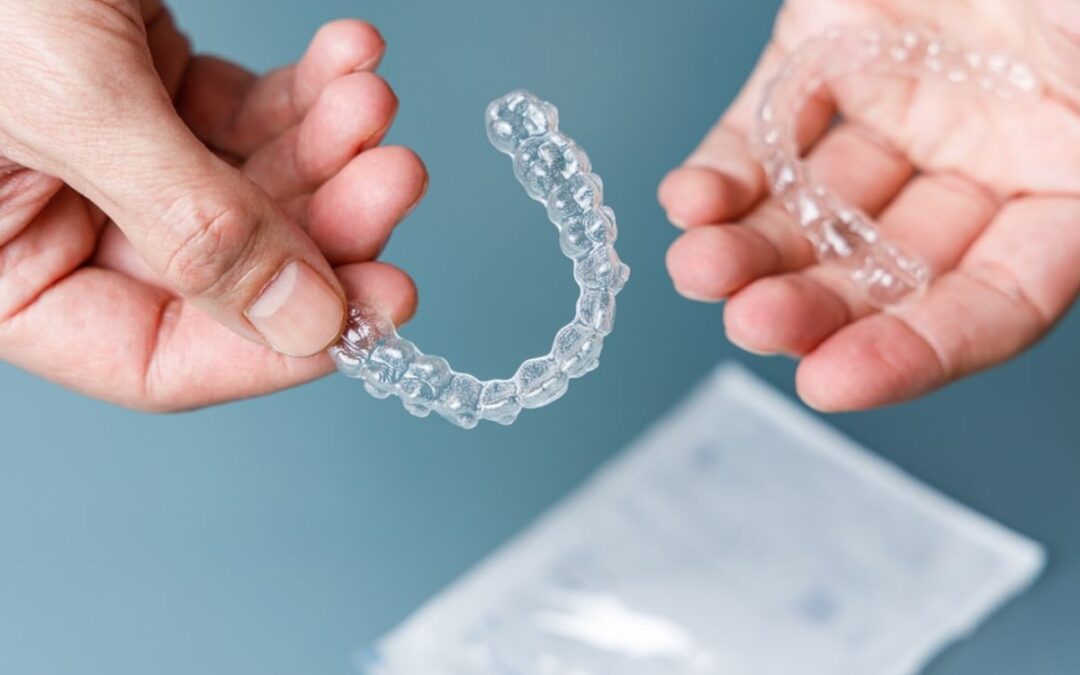
If you’ve invested in cosmetic bonding or veneers to improve your smile, you might wonder if it’s still possible to straighten your teeth later on. Maybe your teeth have shifted over time, or you’re just looking for that final touch of alignment. Whatever the reason, many patients ask us: Can I still get Invisalign in Tulsa if I already have bonding or veneers?
Yes, you can.
In this blog, we’ll walk you through how Invisalign can work with previous cosmetic treatments and what to consider before starting.
Understanding How Invisalign Works
Clear aligners use a series of custom trays to move your teeth into better alignment gently. Each set is worn for a few weeks before switching to the next as your teeth gradually shift.
Because aligners rely on your teeth’s natural shape to guide movement, existing bonding or veneers can affect how well the trays fit and how your teeth respond to pressure. That’s why it’s important for your dentist to carefully evaluate the type and placement of any cosmetic work before starting treatment.
Clear Aligner Treatment with Cosmetic Bonding
A cosmetic dentist uses tooth-colored resin to repair chipped or uneven teeth. If the bonding is minor and doesn’t wrap around the entire tooth, clear aligners usually work well and may not interfere with treatment.
However, if the bonding covers a large surface or significantly changes the tooth’s shape, your dentist will need to confirm that aligners can still work effectively. In some cases, bonded areas may need minor adjustments or touch-ups after treatment if they move along with the teeth.
How Veneers Can Affect Clear Aligner Treatment
Veneers are thin porcelain shells that a dentist bonds to the front of teeth to improve their shape, color, or alignment. Since they are fixed and do not move like natural teeth, they can affect how Invisalign aligners work.
What Dentists Consider Before Starting Clear Aligner Treatment After Cosmetic Work
To determine if Invisalign is a good fit after bonding or veneers, several key factors are evaluated:
- The condition of your veneers or bonding: Are they intact, stable, and not overly bulky?
- How much movement is needed: Minor tweaks are typically easier to manage than more complex alignment changes.
- Your overall oral health: Healthy teeth and gums are essential before starting any orthodontic treatment.
- Your goals: Whether the focus is on bite correction, closing gaps, or fine-tuning alignment, the intended outcome influences the treatment plan.
Advanced diagnostic tools—such as digital scans, impressions, and X-rays—are commonly used to evaluate the condition of your teeth and any existing restorations. These technologies allow your dentist to create a personalized treatment plan that considers previous cosmetic work while reducing the risk of damage during tooth movement.
Can Clear Aligners Damage Veneers or Bonding?
In most cases, Invisalign does not harm veneers or bonding. Unlike traditional braces, clear aligners don’t use brackets or wires attached to the teeth, which generally reduces the risk of affecting cosmetic work.
However, because aligners still apply pressure to move teeth, there is a small chance that veneers or bonding could loosen—especially if they weren’t securely placed or if the underlying teeth shift significantly during treatment.
To reduce this risk, all cosmetic restorations must be stable before starting Invisalign. Regular check-ups throughout treatment can help detect and address any issues, such as unwanted movement or wear, early on.
Personalized Invisalign at Utica Dental of Tulsa
Every smile is unique, especially when there’s previous cosmetic work involved. That’s why we take the time to assess your situation thoroughly and walk you through your options.
Whether you’re dealing with shifting teeth, minor misalignment, or simply want to explore what’s possible, we’re here to help you move forward with confidence.
Call us today to schedule your consultation and find out if Invisalign can be the next step in your smile journey.
FAQs
1. Will Invisalign still fit properly if I have veneers or bonding?
Yes. Clear aligners are custom-made to fit your teeth, including any existing cosmetic work. However, if the bonding or veneers significantly change the shape or size of your teeth, it may affect how well the aligners fit. A thorough evaluation is needed to ensure an accurate fit and effective treatment.
2. Can Invisalign move teeth that have veneers on them?
It depends on how many veneers are present and how they’re placed. Teeth with veneers can still be moved in some cases, but since veneers are rigid and bonded to the tooth’s surface, movement must be planned carefully to avoid damaging them. Minor adjustments are more likely to be successful than major repositioning.
3. Will I need to replace my veneers or bonding after Invisalign treatment?
Not always, but it’s possible. If your teeth move significantly during Invisalign treatment, your existing veneers or bonding may no longer match the new alignment or bite. In such cases, replacing or adjusting them after treatment might be recommended to maintain both function and aesthetics.
4. Should I get Invisalign before or after cosmetic treatments like veneers?
In most cases, it’s best to finish orthodontic treatment, such as Invisalign, before getting veneers or extensive bonding. This ensures your teeth are properly aligned first, allowing cosmetic work to be done with their final position in mind. If you already have veneers or bonding, your dentist can help create a safe and effective treatment plan tailored to your situation.