
Have you ever looked in the mirror and thought, “I wish my teeth were a little straighter,” but the thought of wearing traditional metal braces made you hesitate?
You’re not alone.
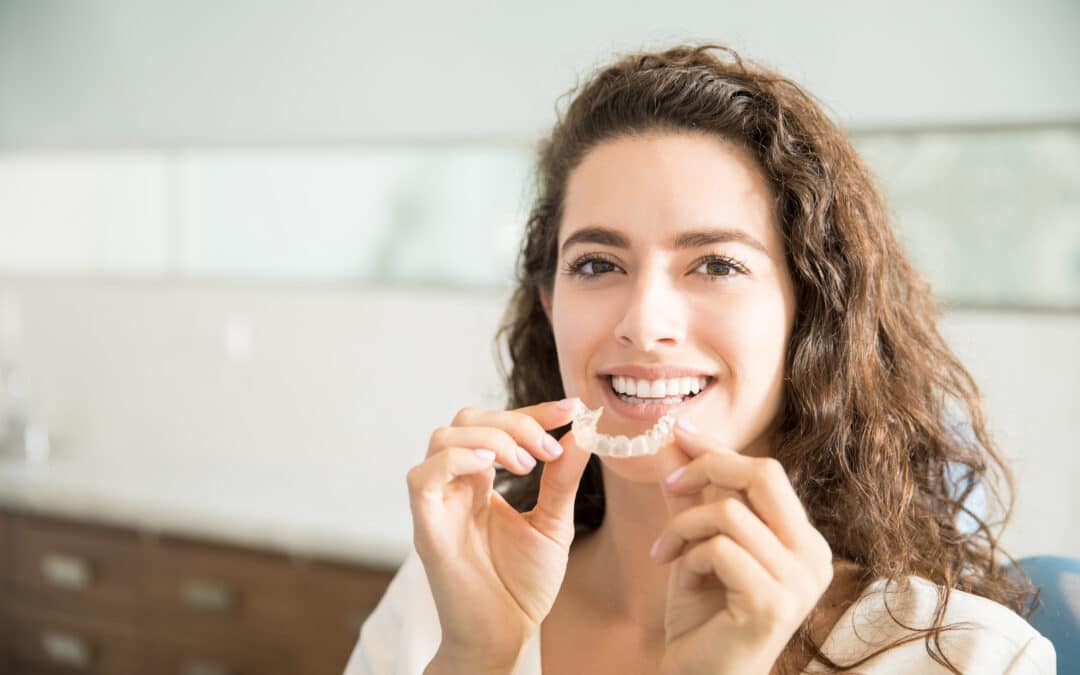
For many adults and teens, Invisalign clear aligners offer a more discreet way to improve the alignment of their smiles. The removable, nearly invisible aligners can fit more easily into everyday routines, whether you’re heading to work, meeting friends for dinner, or enjoying life around Tulsa.
But is Invisalign right for everyone?
The best way to find out is through a professional dental evaluation. If you’re wondering whether you’re a good candidate for Invisalign, here are five signs that may indicate clear aligner treatment could be worth exploring.
1. Your Teeth Are Crowded or Overlapping
One of the most common reasons people consider Invisalign is crowded teeth.
When there isn’t enough room in your mouth for your teeth to fit properly, they may overlap, twist, or appear crowded. Beyond affecting the appearance of your smile, crowded teeth can sometimes make brushing and flossing more challenging.
If you’re a good candidate for Invisalign, clear aligners may be able to gradually move certain crowded teeth into a more organized position.
However, the severity and complexity of crowding matter. Invisalign can treat many alignment concerns, but not every case is suitable for clear aligners. A dentist needs to examine your teeth and bite before recommending treatment.
2. You Have Gaps Between Your Teeth
Small or noticeable spaces between teeth can be another reason to consider orthodontic treatment.
Some gaps occur naturally, while others may develop because of tooth size, jaw structure, or changes in tooth position. Depending on the cause and location of the spacing, Invisalign may be used to gradually bring certain teeth closer together.
If you are a good candidate for Invisalign, your dentist can create a customized treatment plan designed around your specific smile.
It’s important to remember that closing a gap isn’t always as simple as moving two teeth together. Your dentist may need to evaluate your gums, bite, tooth shape, and overall oral health first.
3. You Want a More Discreet Alternative to Traditional Braces
Let’s be honest: many adults don’t want to wear noticeable metal braces.
You may have a busy career, attend college, spend your days meeting clients, or simply prefer a treatment option that doesn’t draw attention to your teeth.
That’s where Invisalign may appeal to certain patients.
The clear aligners are designed to be less noticeable than traditional braces and can be removed when eating and for routine oral hygiene.
For someone who is a good candidate for Invisalign, this combination of discretion and removability can make orthodontic treatment easier to fit into everyday life.
That said, the aligners still require commitment. They need to be worn as directed by your dental professional for treatment to progress as planned.
4. You’re Ready to Take an Active Role in Your Treatment
One of the biggest advantages of removable aligners is also one of the biggest responsibilities.
Unlike traditional braces, Invisalign aligners can be taken out. That means you have to remember to put them back in.
If you’re a good candidate for Invisalign, you should be comfortable following your dentist’s instructions, wearing your aligners consistently, keeping them clean, and attending scheduled appointments.
Your results aren’t just determined by the aligners themselves. Your commitment matters, too.
| What You Need to Do | Why It Matters |
|---|---|
| Wear your aligners as instructed | Helps keep treatment on track |
| Remove them for meals as directed | Helps protect and maintain the aligners |
| Maintain regular brushing and flossing | Supports healthy teeth and gums |
| Clean your aligners properly | Helps maintain hygiene |
| Attend follow-up appointments | Allows your dentist to monitor progress |
If you know that you struggle to follow a daily routine, talk openly with your dentist. Traditional braces may sometimes be a better option depending on your circumstances.
5. Your Teeth and Gums Are Healthy Enough for Treatment
Before starting Invisalign, your overall oral health matters.
Cavities, active gum disease, or other untreated dental problems may need to be addressed before beginning orthodontic treatment.
That’s why being a good candidate for Invisalign isn’t simply about wanting straighter teeth. Your dentist also needs to determine whether your teeth, gums, and supporting structures are healthy enough for treatment.
At Utica Dental of Tulsa, a dental evaluation can help identify existing oral health concerns and determine whether clear aligner treatment is appropriate for your individual needs.
Invisalign vs. Traditional Braces: Which Is Right for You?
Both Invisalign and traditional braces can be effective orthodontic options, but they work differently and may be better suited to different patients.
| Invisalign Clear Aligners | Traditional Braces |
| Clear, discreet appearance | More visible brackets and wires |
| Removable for eating and oral hygiene | Remain attached during treatment |
| Requires consistent patient compliance | Less dependent on remembering to wear appliances |
| Often convenient for busy lifestyles | Can be suitable for more complex cases |
| Custom series of clear aligners | Brackets and wires gradually move teeth |
The right choice depends on your individual dental needs. In some cases, traditional braces may be more appropriate.
A Dentist Should Determine Whether You’re a Good Candidate for Invisalign
Online quizzes can be a helpful starting point, but they can’t replace an in-person dental evaluation.
Dr. Matthew E. Walker of Utica Dental of Tulsa has pursued continuing education in areas including Invisalign, cosmetic veneers, dental implants, cosmetic reconstruction, and laser gum therapy. His experience and ongoing education allow him to evaluate patients from both an orthodontic and overall dental-health perspective.
During your consultation, Dr. Walker can assess your teeth and bite, discuss your smile goals, and determine whether clear aligner treatment may be appropriate for you.
If you’re searching for a good candidate for Invisalign, the first step isn’t ordering aligners online—it’s understanding your individual dental needs. Call Utica Dental of Tulsa at +1 918-673-2601 to schedule a consultation.
Frequently Asked Questions About Invisalign
1. How do I know if I’m a good candidate for Invisalign?
You may be a good candidate for Invisalign if you have certain types of crowding, spacing, or alignment concerns and your teeth and gums are healthy. A dentist must evaluate your individual case to determine whether Invisalign is appropriate.
2. Can Invisalign fix severely crooked teeth?
Invisalign can address many alignment concerns, but it isn’t suitable for every orthodontic case. The complexity of your tooth movement, bite, and overall dental health will determine whether clear aligners are a reasonable option.
3. Is Invisalign better than traditional braces?
Neither option is universally better. Invisalign may appeal to patients who value a more discreet and removable treatment, while traditional braces may be preferable for certain complex cases. Your dentist can help you compare the options.
4. How long does Invisalign treatment take?
Treatment time varies from patient to patient. The complexity of your case, the amount of tooth movement required, and how consistently you follow your treatment instructions can all affect the timeline.
5. Can I eat normally while wearing Invisalign?
Typically, aligners are removed for meals. You should follow your dentist’s instructions regarding eating, drinking, and cleaning your aligners.
Ready to Find Out If Invisalign Is Right for You?
If you’ve been thinking about straightening your smile but aren’t sure whether clear aligners are the right choice, a professional consultation is a good place to start.
At Utica Dental of Tulsa, you can discuss your smile goals and learn whether Invisalign may be suitable for your needs.
Call Utica Dental of Tulsa at +1 918-673-2601 to schedule a consultation.
Remember, the goal isn’t simply to find a good candidate for Invisalign—it’s to find the treatment approach that is right for your smile, oral health, lifestyle, and long-term goals.
Trusted U.S. Dental Resources
For reliable information about oral health and orthodontic care, patients can also explore resources from recognized professional organizations, including:
- American Dental Association (ADA): The nation’s leading professional organization for dentists and a trusted source of oral health information.
- American Association of Orthodontists (AAO): A professional organization dedicated to orthodontic education and patient information.
- National Institute of Dental and Craniofacial Research (NIDCR): Part of the National Institutes of Health (NIH), providing evidence-based information about oral, dental, and craniofacial health.
- Centers for Disease Control and Prevention (CDC) – Oral Health: Provides public health information and resources related to oral health and dental conditions.